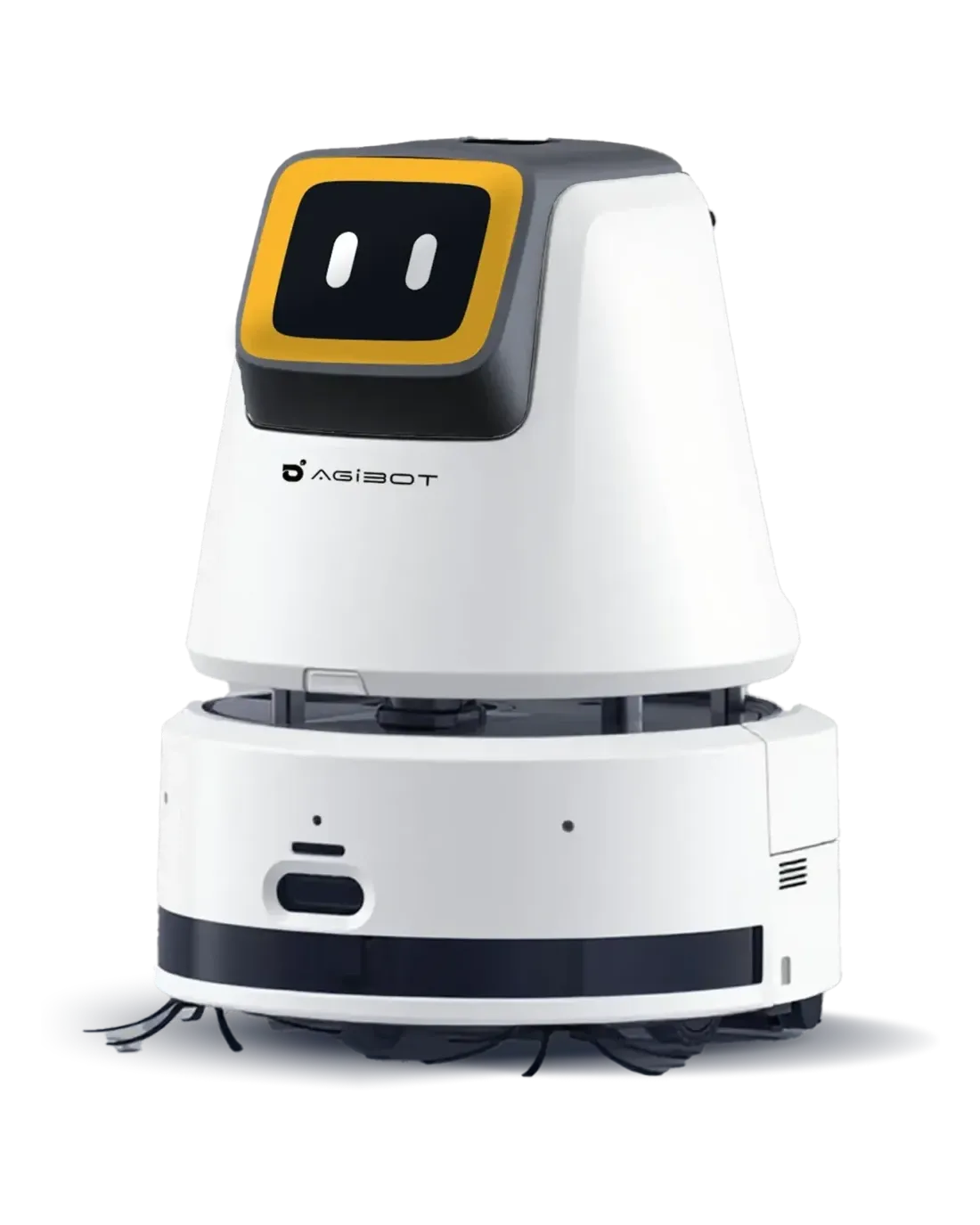
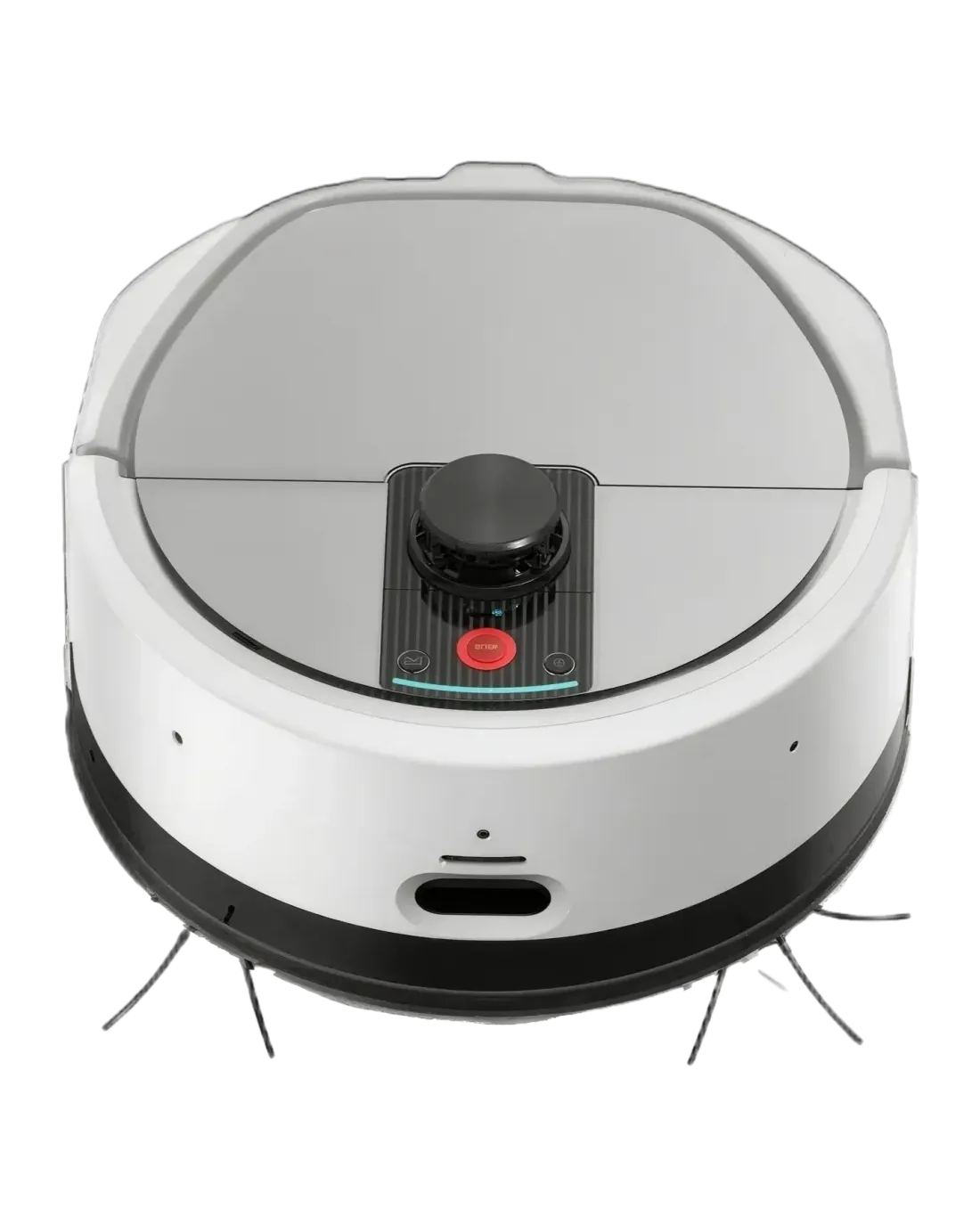
AGIBOT C5 Autonomous Commercial Cleaning Robot
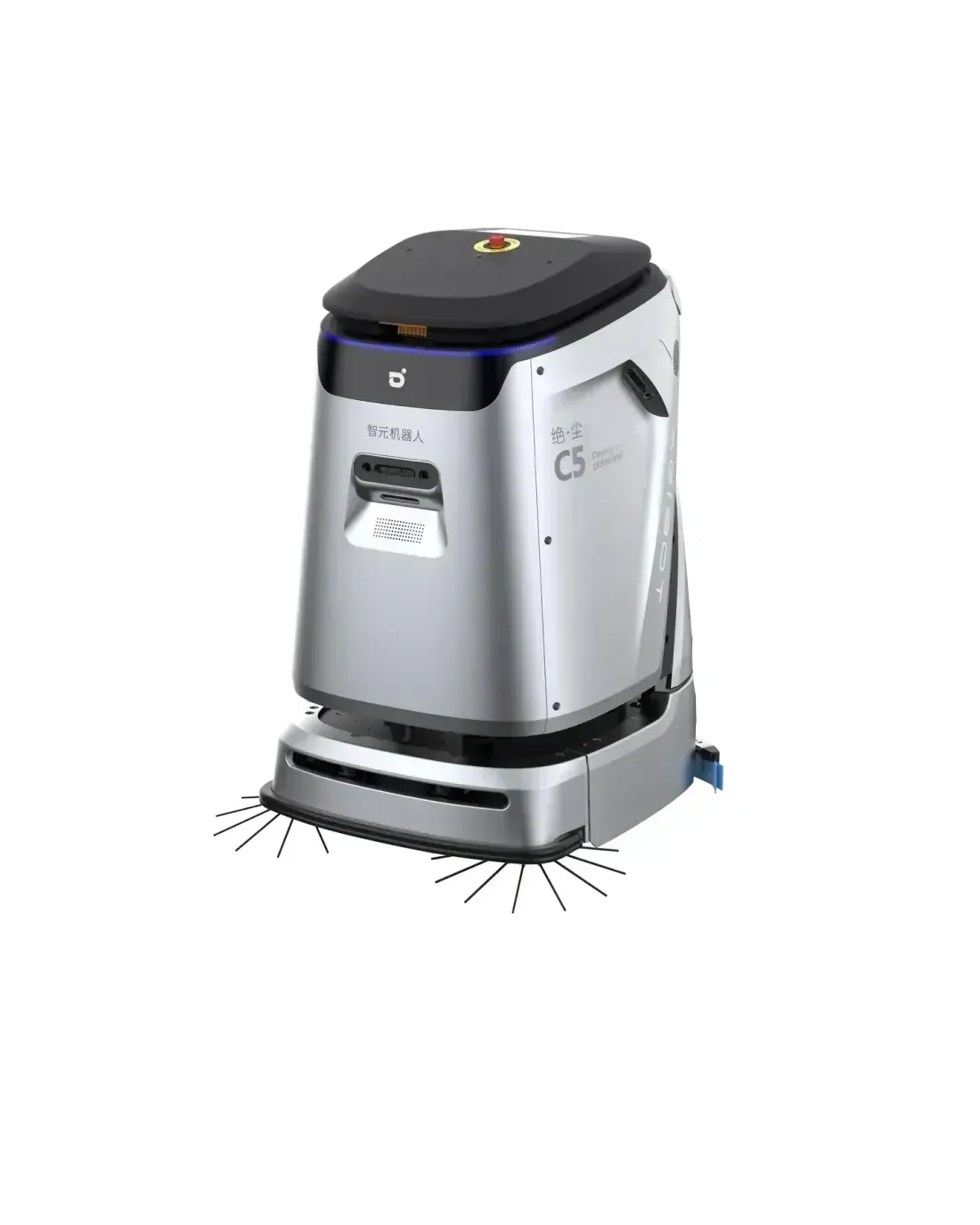
C5 is built for large, complex indoor floors. V/W dual rollers sweep and scrub in one pass; separate 45 L clean and wastewater tanks support long shifts; adjustable down pressure reaches 25 kg.
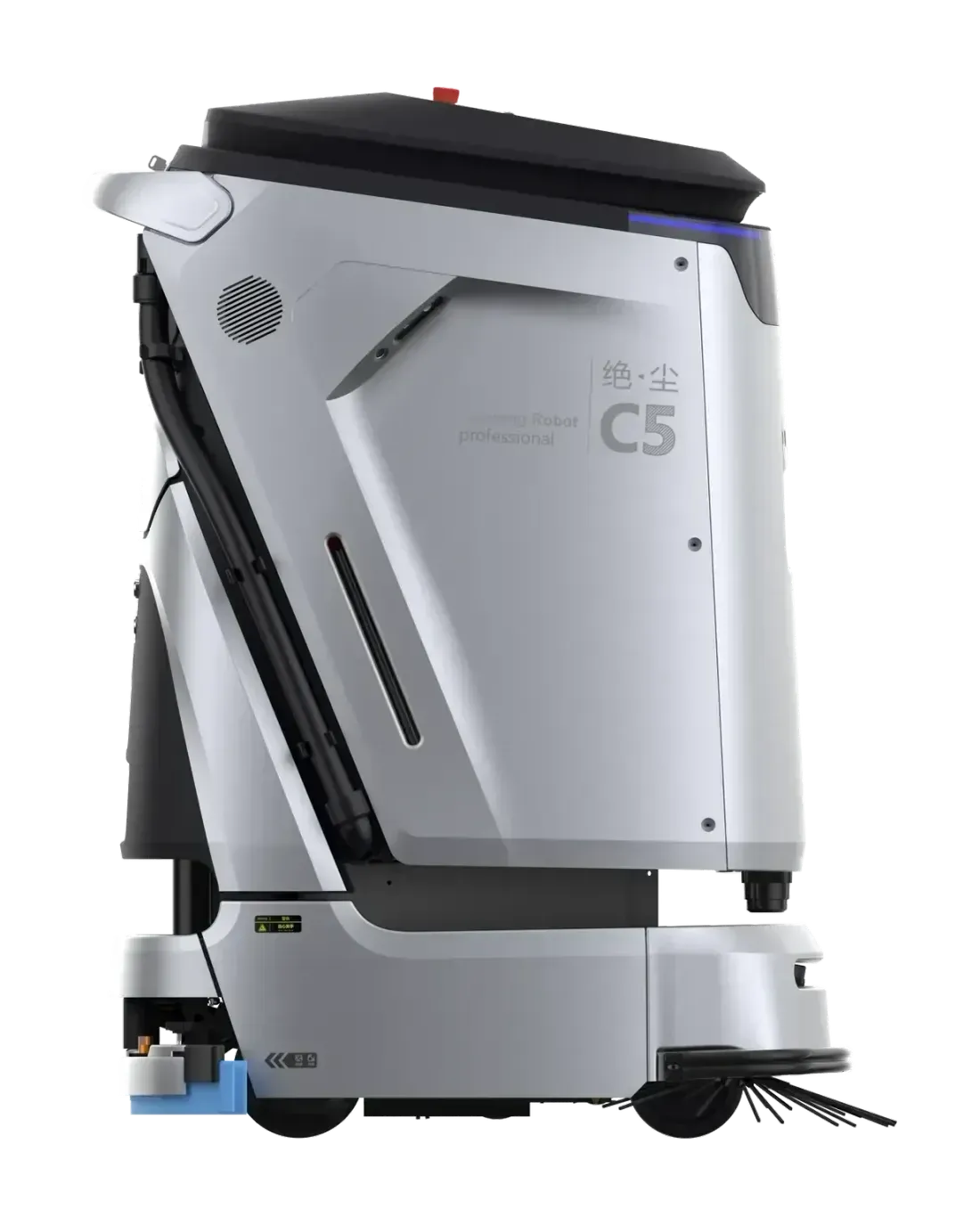
- 1980 m²/hMax cleaning efficiency (specified conditions)
- 45 + 45 LClean / wastewater tanks
- <68 dB(A)Maximum noise level
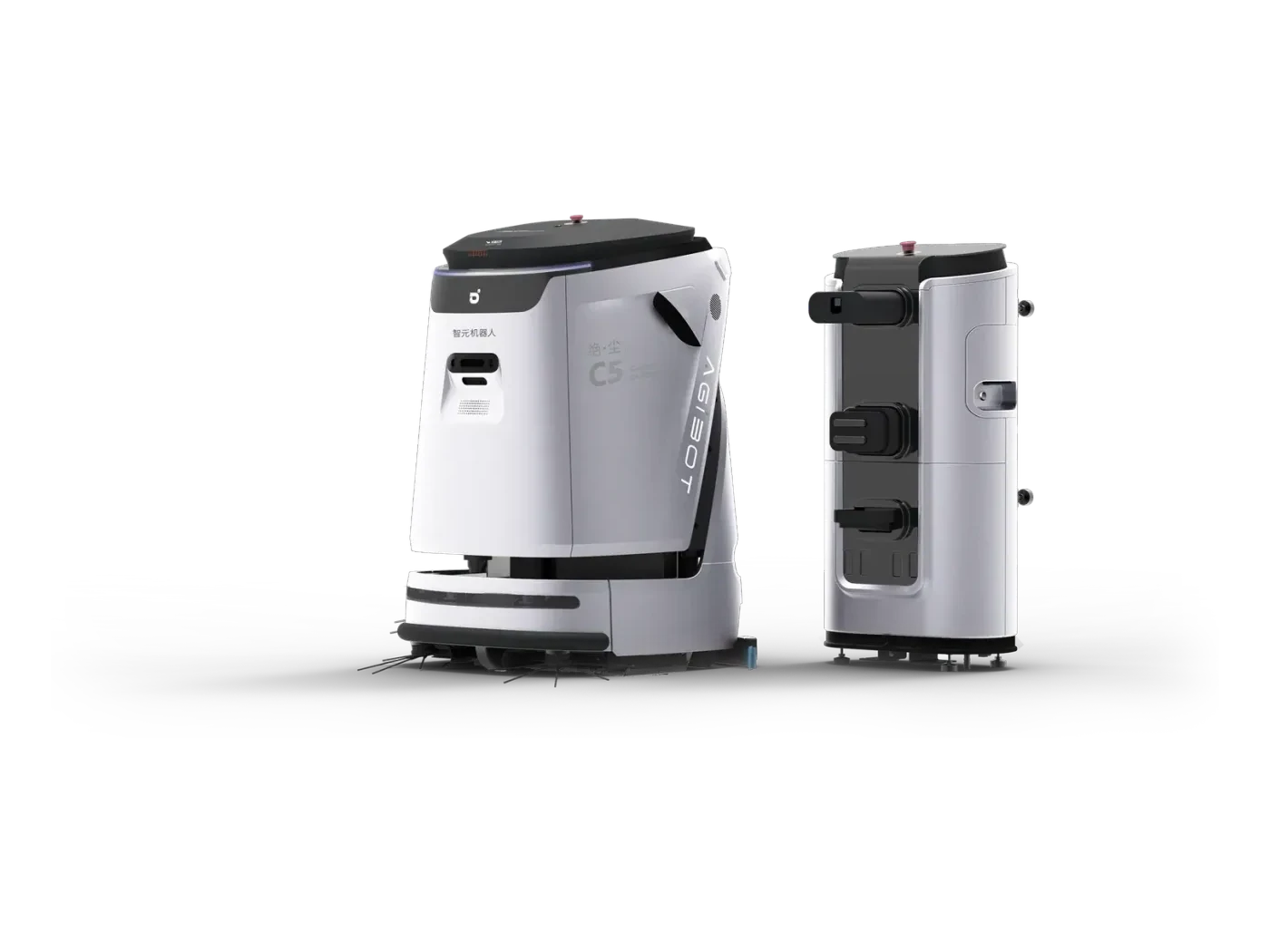
Machine and docking station
C5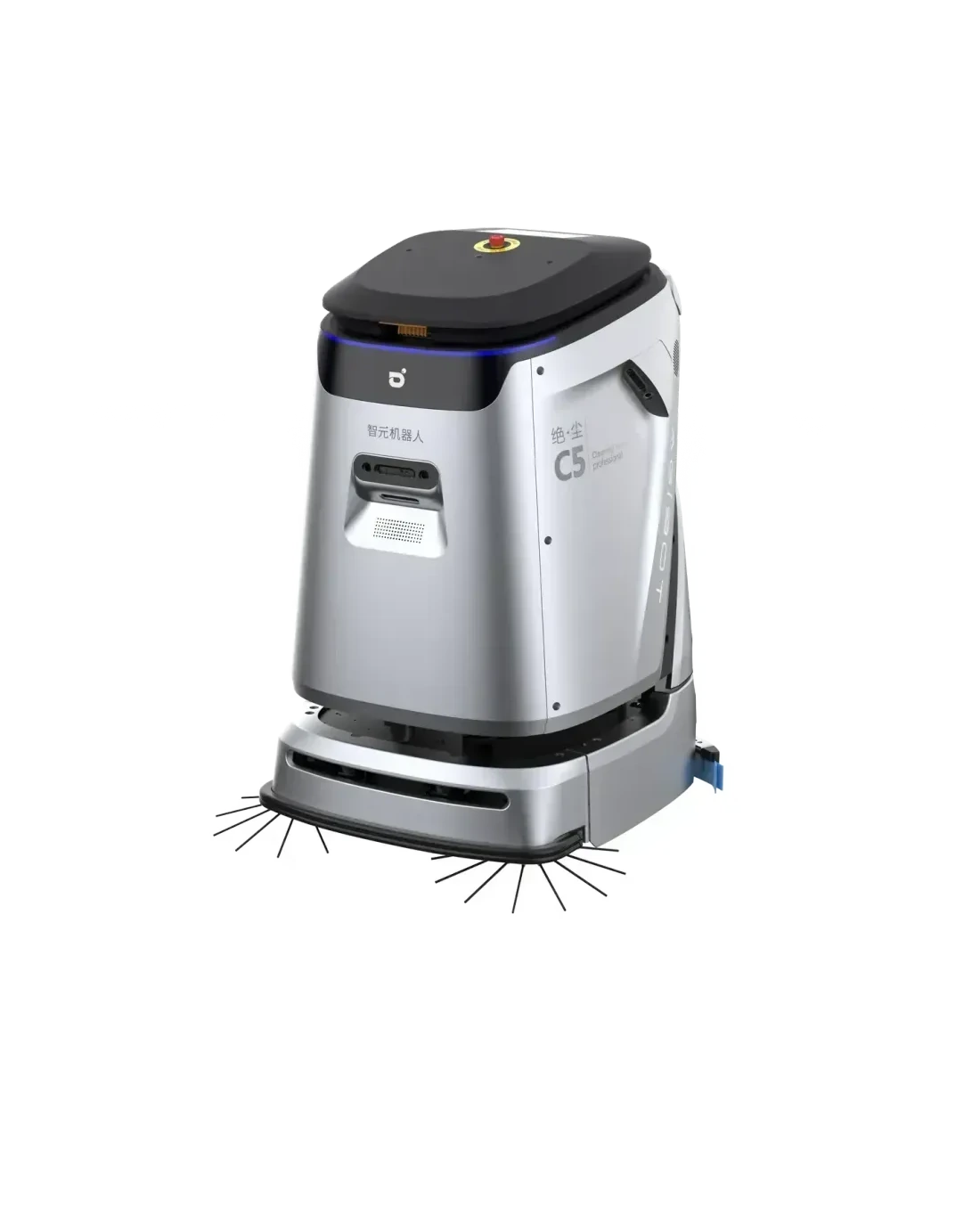
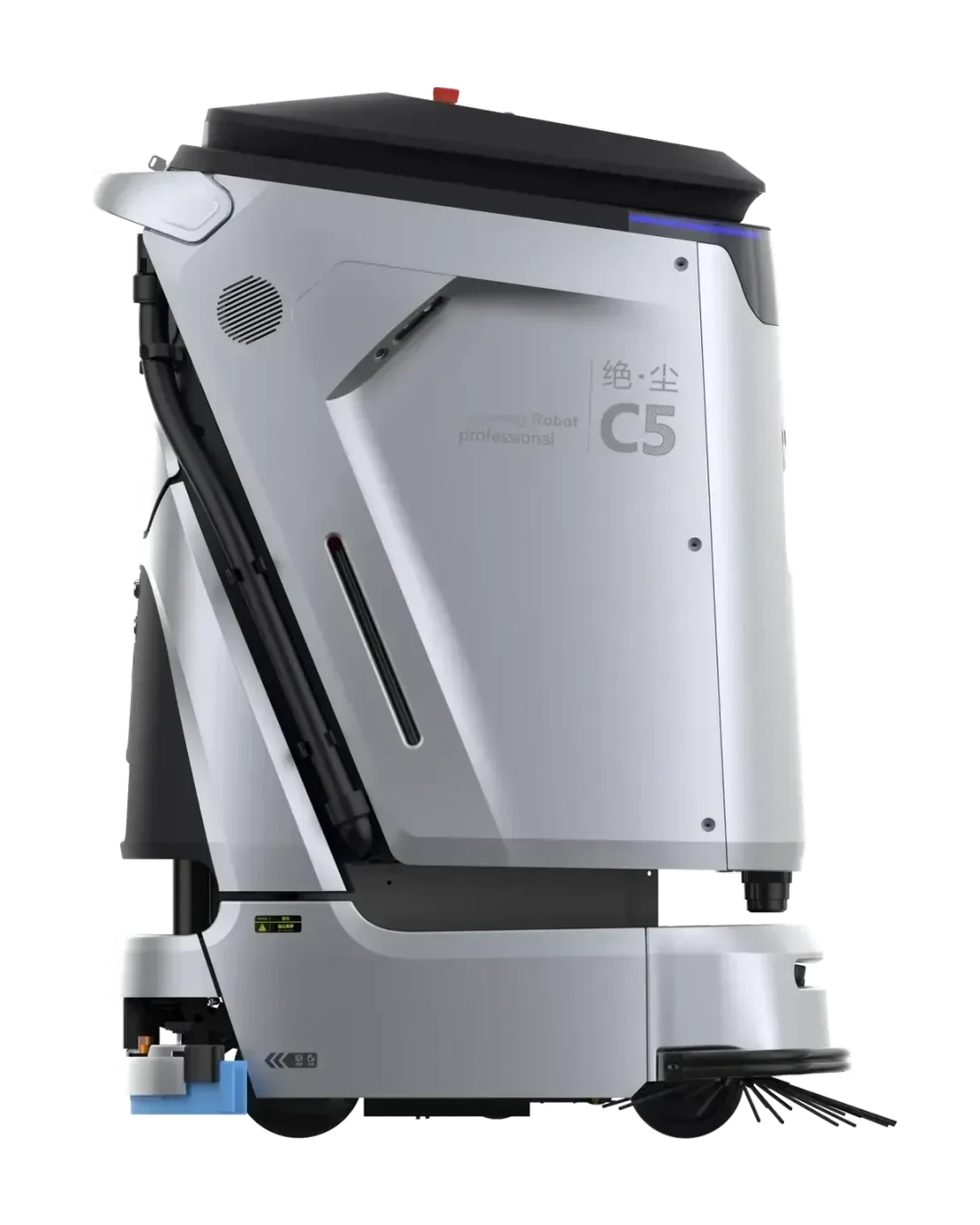
Commercial Floor Cleaning Capabilities
Four cleaning functions on one chassis: sweeping, scrubbing, dust mopping and one-pass. Scrubbing width is 550 mm; with both side brushes, sweeping coverage reaches 848 mm.
Sweeping
Collects dust, debris and loose particles; with both side brushes it covers a 848 mm sweeping width.
Scrubbing
A 550 mm powered scrubbing path handles routine and deeper cleaning; down pressure is adjustable up to 25 kg.
Dust Mopping
Dry dust removal maintains floors between wet cleaning passes; runtime is 8 h with the roller brush running and 10 h without it, according to the current answer set.
One-Pass Cleaning
Front V and rear W rollers combine sweeping and scrubbing. They do not have separate water or vacuum circuits; debris is lifted and thrown into the dustbin ahead of the rollers.
Commercial Cleaning Robot for Multiple Applications
C5 is sized for large indoor floors with mixed surfaces and steady foot traffic. Six environments account for most deployments.
Industrial Facilities
For factories, workshops and other large industrial indoor spaces.
Warehouses and Logistics
Storage and picking areas with long aisles and constant trolley traffic.
Transportation Hubs
For airports, railway stations and other large transportation facilities.
Supermarkets and Retail Stores
For routine floor cleaning across large retail spaces.
Office and Commercial Buildings
For daily autonomous cleaning of offices and commercial properties.
Healthcare Facilities
For controlled floor-cleaning operations in healthcare environments where supported by deployment requirements.
Compatible surfacesCement · Marble · Epoxy flooring · PVC · Emery flooring
Embodied Intelligence for Autonomous Cleaning
C5 brings perception, decision-making, motion control and cleaning execution into one robotic system. The machine reacts to the site while it works; it is not limited to repeating a fixed path recorded during setup.
- Environmental perception
- Decision making
- Autonomous motion
- Cleaning execution
Environmental Perception
LiDAR, RGBD, fisheye vision and side-facing sensors build a layered view of obstacles, people, edges and floor transitions.
Intelligent Decision Making
Semantic segmentation and local replanning let the robot slow down, detour or stop without abandoning the cleaning task.
Autonomous Motion
The drivetrain and safety controls handle slopes, thresholds, emergency stops and recovery behaviour defined for the platform.
Task Execution
The machine lifts the cleaning tools when crossing obstacles, resumes the saved mode afterwards and reports faults through the platform.
Intelligent Navigation and Multi-Sensor Perception
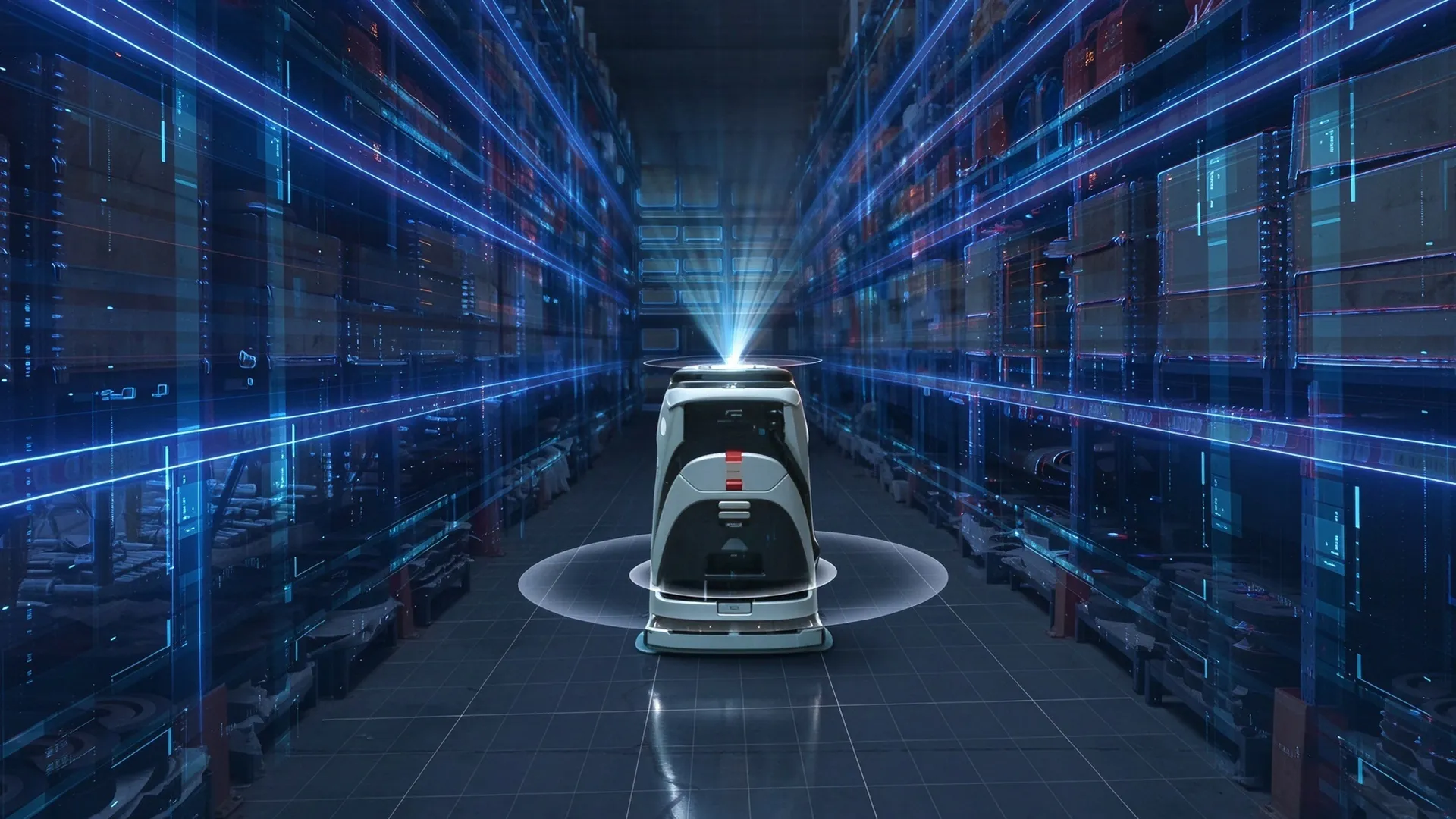
C5 combines a 2D LiDAR with RGBD and fisheye vision. The goal is not only to follow a route, but to recognise people, equipment and floor changes while the cleaning task continues.
Sensor Configuration
One 2D LiDAR scans 300° with a maximum range of 50 m; four RGBD sensors and one top-view fisheye camera provide close-range and overhead visual coverage.
Map Creation and Accuracy
Mapping is performed by an operator pushing the machine across the target area; coverage depends on walking speed. The confirmed positioning accuracy is within 50 mm, and CAD import is not supported because as-built sites differ from drawings.
Obstacle Response
Local replanning can respond in about 50 ms or less depending on settings and site conditions. Semantic recognition covers dozens of common objects, including people, suitcases, carts, tables, chairs and potted plants.
Passage and Clearing Limits
One-way passage is 900 mm; a right-angle turn requires 1,200 mm and the scrubbing turning radius is 1,720 mm. The 15 mm obstacle limit applies while travelling, and the machine does not clean across the threshold.
Reflective and Transparent Surfaces
Glass walls and mirrors can be recognised; highly reflective floors may still affect optical sensors, so virtual walls or no-go zones are recommended during mapping where needed.
- Minimum passage width
- 900 mm
- Right-angle aisle
- 1,200 mm
- Scrubbing turning radius
- 1,720 mm
- Maximum obstacle (travel)
- 15 mm
- Positioning accuracy
- ≤50 mm
Measured Cleaning Performance, Not Only the Peak Figure
The 1,980 m²/h figure is the maximum under specified conditions. Site planning should use the confirmed real-world range of about 700–1,500 m²/h, which falls further in crowded or narrow-aisle areas.
Adjustable Cleaning Pressure
Down pressure is adjustable up to 25 kg, allowing the setting to follow soiling and floor conditions.
Dual-Roller Geometry
The front V roller lifts debris into the front dustbin while the rear W roller supports the wet cleaning pass.
Dual-Chamber Squeegee
The dual-chamber squeegee targets water left in floor joints and grout lines. The improvement depends on joint width, depth and condition, so no fixed percentage is claimed.
Edge and Near-Obstacle Coverage
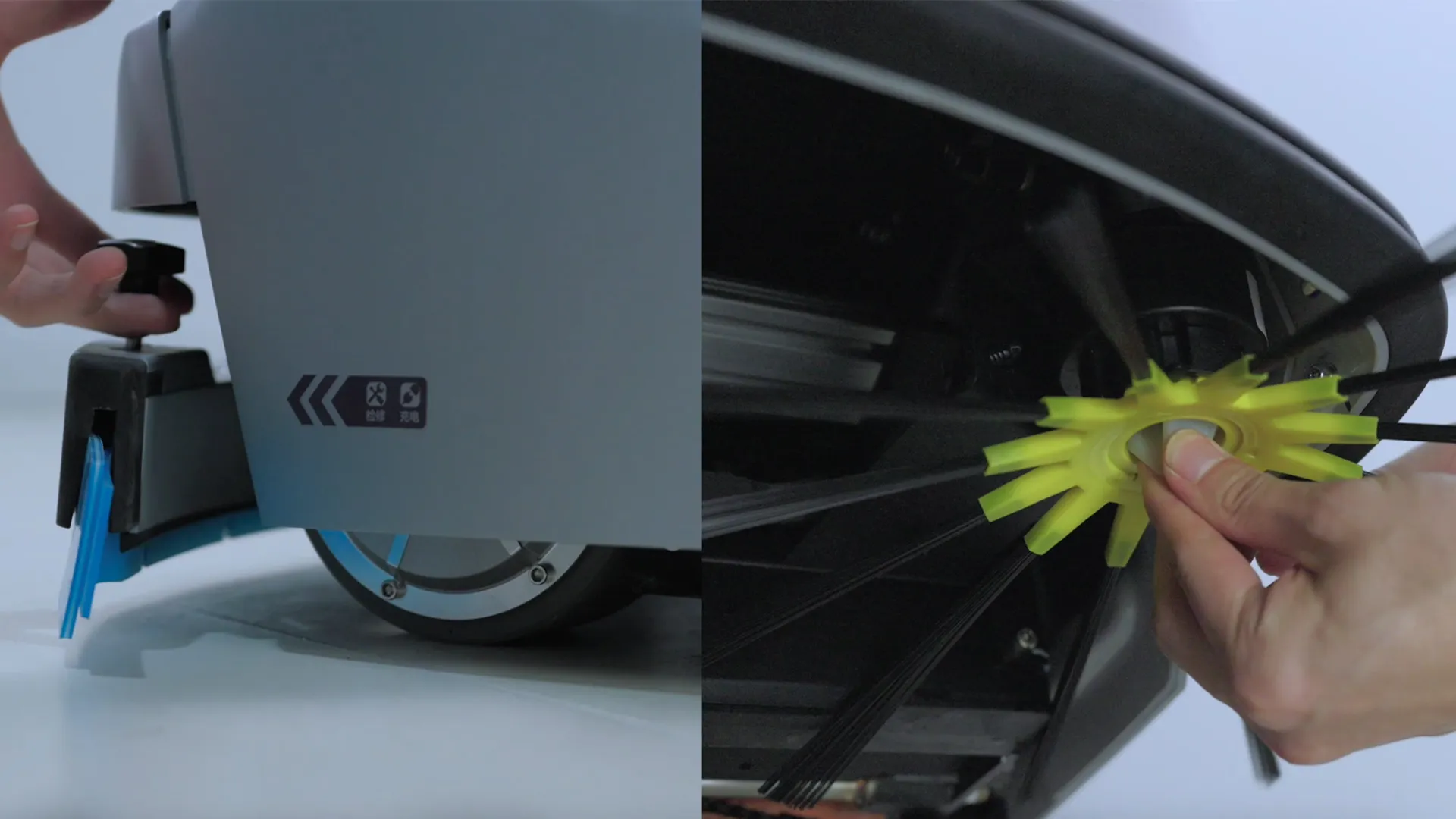
Side brushes extend beyond the body; RGBD sensors on both sides support close boundary perception. Recessed skirting is not supported.
Debris Collection Rate
The >95% debris collection rate describes collection efficiency for common debris in the scene; it is not tied to cleaning area.
- Scrubbing width
- 550 mm
- Sweeping width
- 848 mm
- Actual efficiency range
- 700–1,500 m²/h
- Down pressure
- ≤25 kg
- Debris collection
- >95%
Deployment From Site Survey to Handover
C5 deployment is a sequence rather than a single installation visit: confirm the site and station position, map the area, create and test tasks, then train the team that will run the machine.
Site and Station Readiness
Check passage widths, thresholds, slopes, floor transitions, lift and access-control conditions, plus power, water inlet and floor drain at the proposed station position.
Typical Deployment Time
For sites up to 10,000 m², planning is commonly around two days. Offices and hotels can often finish in one day; factories may take two to three days, depending on complexity.
Mapping and Remote Support
The site team can map the area after training. Zone drawing and point setup can be supported remotely when the robot is online and the network is stable; station installation still requires a site visit.
Lift and Access Integration
Lift control is added as a hardware module, independent of lift brand, and requires qualified lift work. The 4G cloud link does not provide local door holding when the network is unavailable.
Task Testing and Training
The handover covers task creation, test runs, operator training and sign-off. Complex industrial or retail sites may need an engineer on site; standard sites can be handed to the trained customer team.
Charging, Water and Self-Cleaning at the Station
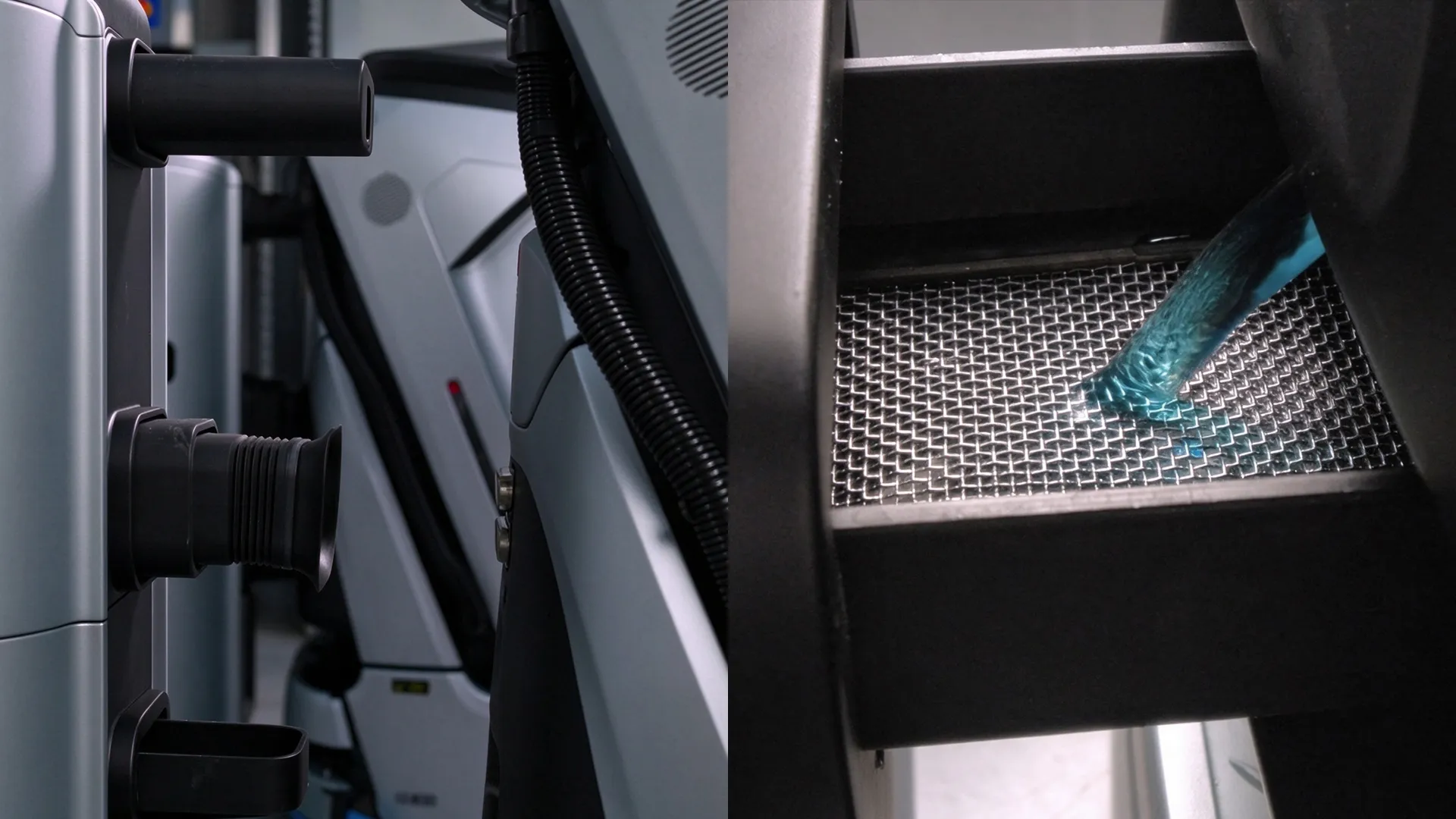
C5 returns to a fixed docking station for charging, cleaning-water refill and wastewater drainage. The station closes the routine cycle, but it still needs power and a nearby water connection and drain.
- Cleaning
- Return to station
- Charging
- Water management
- Self-cleaning
- Next mission
Station Footprint and Installation
The station measures 525 × 550 × 1,025 mm and weighs 38 kg. It needs a fixed installation, clear access to the machine and a position near the water inlet and floor drain.
Automatic Charging and Task Resume
The station charges the robot from low battery in about 1.5 h. Scheduled tasks and breakpoint resume are supported, so an interrupted task can continue after charging.
Clean and Wastewater Management
The robot carries separate 45 L clean- and wastewater tanks. The station holds 8 L of wastewater and reports measured fill and drain rates of 7–10 L/min and 10–15 L/min.
Wastewater Tank Self-Cleaning
The standard sequence is spray, rinse and drain. The cycle is adjustable to site soiling and uses no more than 10 L of water; disinfectant or deodorant can be added manually.
One Station, Multiple Robots
The station can serve multiple robots in request order. Based on runtime and replenishment demand, one to two C5 robots per station is recommended.
What the Station Does Not Add
C5 uses a 1.8 L dustbin and no station dust bag; it also has no mop-drying function. Those tasks should not be assumed when planning labour.
Commercial Cleaning Robot Safety and Reliability
Safety is both how the machine reacts around people and how it behaves when a component fails. C5 combines multi-sensor perception, emergency stopping, self-check and remote fault reporting.
Multi-Sensor Safety Perception
LiDAR, RGBD, fisheye, side-facing, collision and fall sensors contribute to obstacle avoidance and operational safety.
Emergency Stop and Parking
An emergency-stop button stops the robot in milliseconds; from maximum speed the stopping distance is no more than 200 mm. The drive control uses a dual-circuit design for parking on slopes.
Brushless Fan and Service Life
The brushless suction fan is rated at 500 W with up to 1,800 L/min airflow and a stated service life of 10,000 h. It is designed as a maintenance-free unit.
Self-Check and Fault Reporting
Self-check covers sensors, motors and the main controller. Abnormal core components are reported in real time through the platform and app alarms.
C5 is designed for indoor splash exposure but is not rated IP54 and must not be washed down. Certifications and test conditions are published only where formally verified; performance varies with floor, soiling and configuration.
Digital Management for Autonomous Cleaning Operations
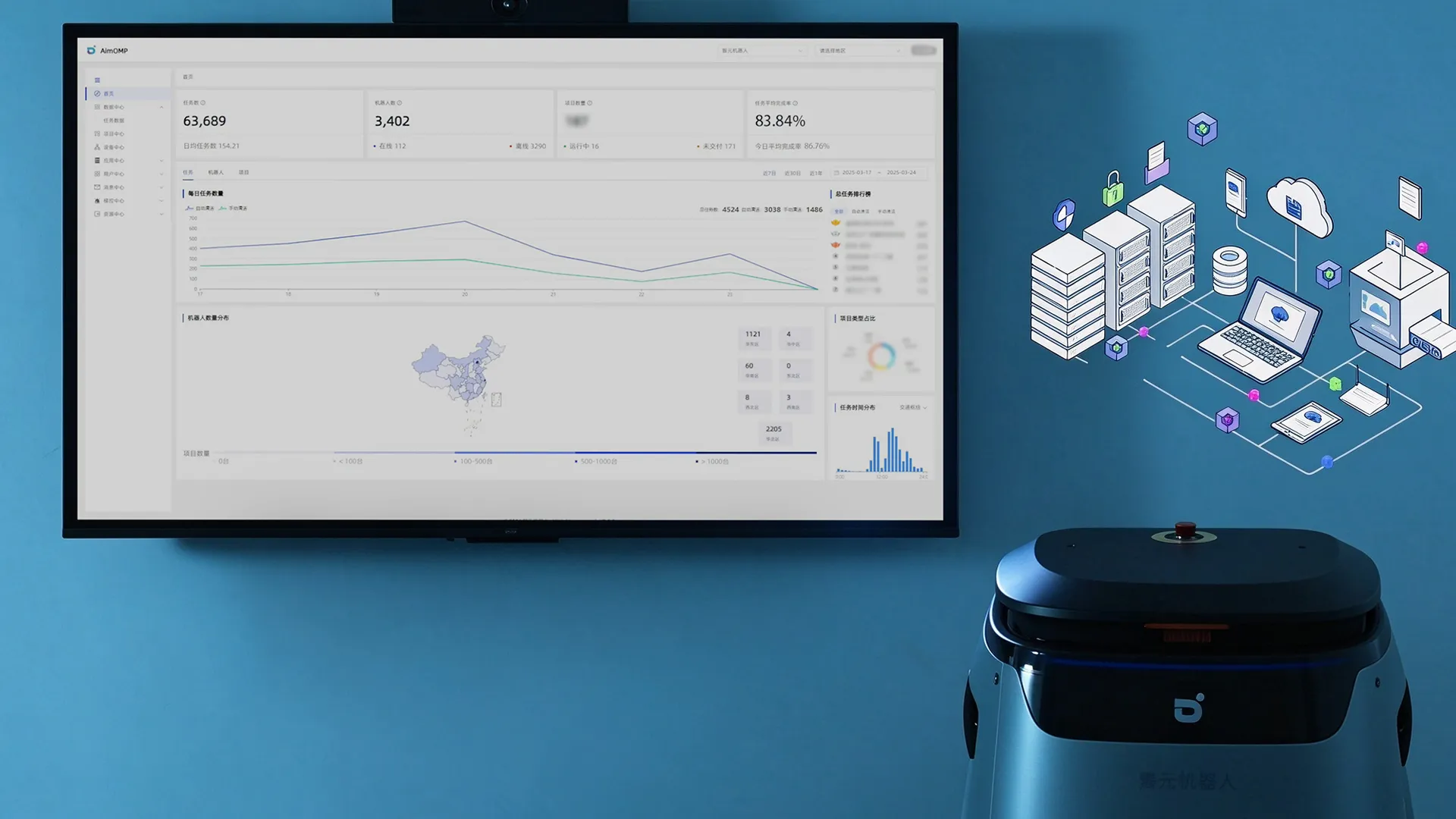
Tasks, reports and device state can be managed from the robot, a mobile app or the cloud. C5 supports role-based access and can keep map and task data locally for offline work.
- Robot
- Mobile
- Cloud
- Building systems
Two Mobile Roles
The cleaning-staff app covers local settings, task reports and alarms; the delivery and operations app adds live location, remote control, map management and data reports.
Schedules and Zones
Scheduled and recurring tasks are supported, along with different cleaning intensities by time window, virtual walls and no-go zones.
Reports and Permissions
Cleaning reports are generated automatically. Users can be assigned different roles and different device or function permissions.
Local or Cloud Data
Data can be stored locally or in the cloud; localised deployment is supported. The robot keeps maps and assigned tasks on board so it can continue when the network is unavailable.
AGIBOT Robotics and Embodied Intelligence
C5 combines robotics hardware, intelligent perception, motion control and software capabilities to bring embodied intelligence into commercial cleaning applications.
Intelligent Robotics
AGIBOT’s robotics technology provides the foundation for autonomous physical interaction.
Perception and Motion
Robotic perception and motion capabilities enable operation in real-world environments.
Commercial Robotics Applications
C5 demonstrates the application of embodied intelligence to professional cleaning tasks.
AGIBOT C5 Technical Specifications
General specifications
- Dimensions
- 680 × 520 × 1,330 mm
- Unloaded weight
- 170 kg
- Maximum speed
- 1 m/s
- Minimum passage width
- 900 mm
- Maximum obstacle (travel)
- 15 mm
- Maximum slope (loaded / unloaded)
- 5° / 8°
- Maximum noise level
- <68 dB(A)
Cleaning specifications
- Scrubbing width
- 550 mm
- Sweeping width (incl. side brushes)
- 848 mm
- Max cleaning efficiency (specified conditions)
- 1980 m²/h
- Clean water capacity
- 45 L
- Wastewater capacity
- 45 L
- Down pressure
- Up to 25 kg, adjustable
- Debris collection rate
- >95%
- Dustbin capacity
- 1.8 L
- Filter basket capacity
- 2.5 L
- Cleaning modes
- Sweeping · scrubbing · dust mopping · one-pass
Battery specifications
- Battery capacity
- 24 V · 80 Ah · LiFePO4
- Cycle life
- 2 years / 2,000 cycles
- Charging time
- 1.5 h
- Scrubbing runtime
- 3 h
- Dust-mopping runtime
- 8–10 h
Workstation specifications
- Workstation dimensions
- 525 × 550 × 1,025 mm
- Weight
- 38 kg
- Wastewater tank capacity
- 8 L
- Filling speed
- 7–10 L/min
- Drainage speed
- 10–15 L/min
- Charging and manual power
- 1,800 W at the station; 1,200 W manual, 1,500 W peak
- Rated input voltage
- 200–240 V
- Wastewater self-cleaning
- About 4 min; adjustable; max. 10 L
- Robots per station
- Multiple robots supported; one to two robots per station recommended
Navigation and connectivity
- Navigation technology
- LiDAR and vision fusion
- LiDAR
- 1 × 2D, 300° scan, 50 m max range
- Vision
- 4 × RGBD sensors + 1 top-view fisheye camera
- Point-cloud / image fusion
- Supported
- Positioning accuracy
- ≤50 mm
- Minimum obstacle detection
- 30 mm
- Building-system integration
- Hardware lift-control module, brand-independent; professional lift works required
- Wi-Fi
- —
- 4G
- —
- LoRa
- —
Figures are stated for the conditions under test and vary with floor, soiling and configuration.
Before you choose
Four points that matter more than the headline figure, each linked to the answer behind it.
Measure the aisle before the machine
One-way passage is 900 mm, a right-angle turn needs 1,200 mm, and the turning radius in scrubbing mode is 1,720 mm. Check those three against the site before choosing a configuration.
The rated efficiency is not the site figure
Real cleaning efficiency is around 700–1,500 m²/h and falls in crowded or narrow-aisle sites. Sizing should start from the cleanable area and the aisle layout, not from the maximum figure.
Two runtimes, not one
Scrubbing runtime is 3 h; dust-mopping runtime is 8 h with the roller brush running and 10 h with it off. Plan a shift against the mode the site actually uses.
A width is only useful with its definition
The 550 mm figure is the scrubbing width; with both side brushes the sweeping width is 848 mm. Quote both when you compare machines, or the numbers will not line up.
Service and Support
The project path covers site survey, deployment planning, operator training and after-sales support. Remote diagnosis and OTA updates handle many issues before a site visit is needed.
Survey and deployment plan
We check passages, surfaces, station utilities, lift conditions and the cleaning window, then set the zone and training plan.
Commissioning and operator training
After training, the site team can map and run standard tasks. Complex industrial or retail projects receive additional engineer support.
Remote support and OTA
Remote technical support covers genuine product faults. OTA updates are free, typically every two to three months, and require a stable network connection.
After-sales response and spares
Response targets are 0.5 h for KA and 1 h for standard customers; safety or property-damage issues receive a solution within 2 h. A loan unit is provided when an on-site repair is not possible.
Projects using this model
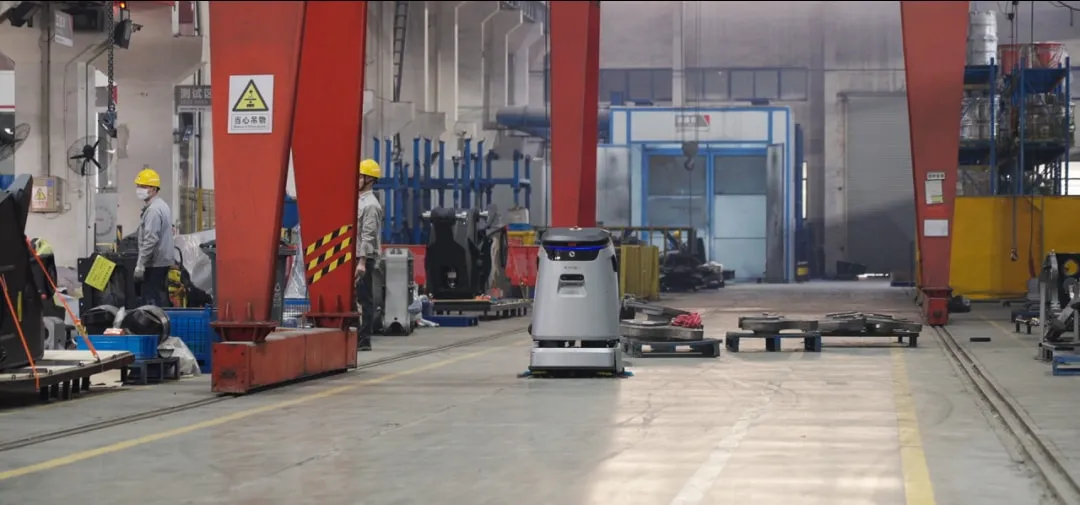
Heavy oil, clean around the clock
2,000 m²Workshop floor
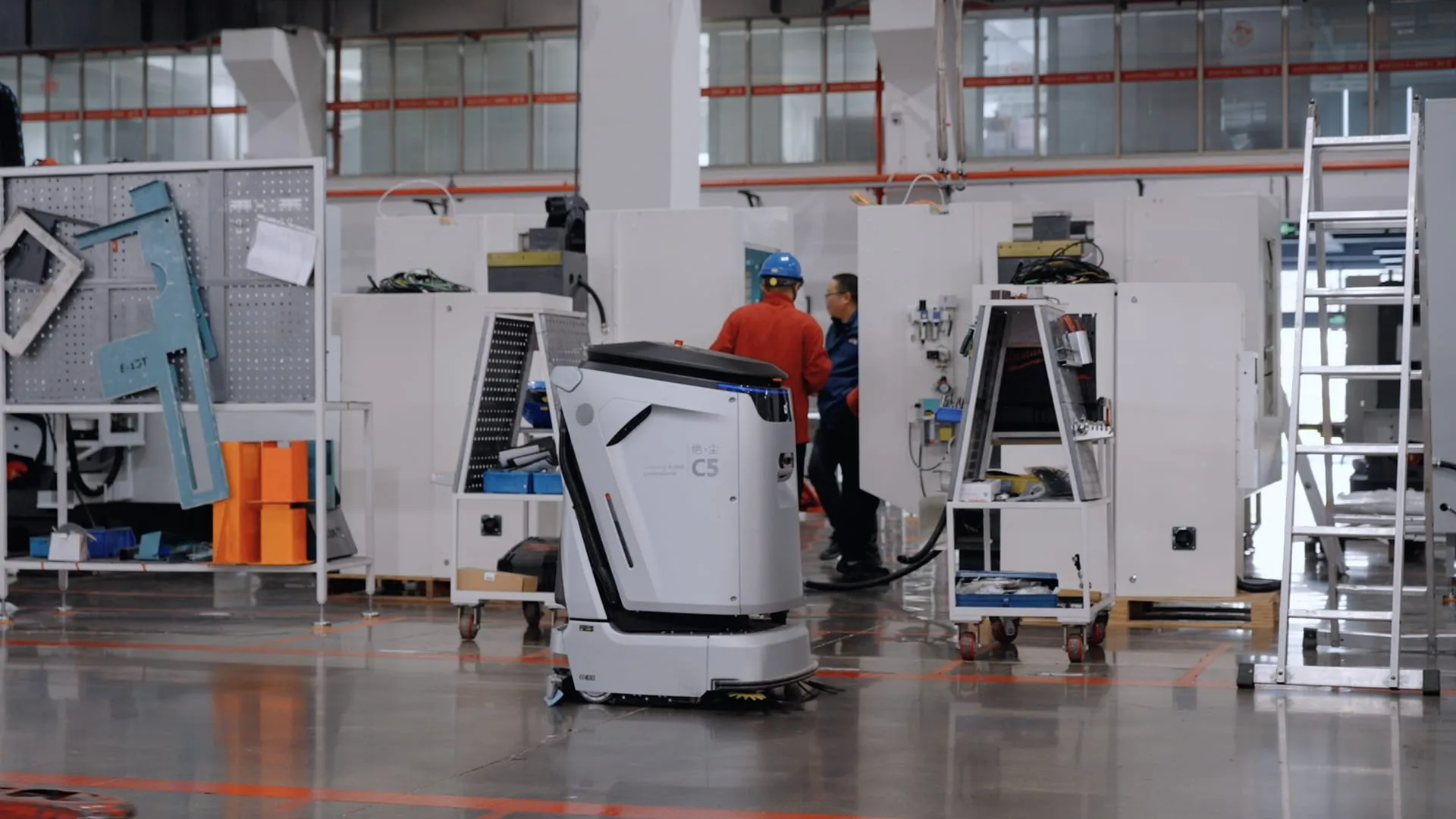
80% of floors, robot-run
5,000–8,000 m²Cleaned per day
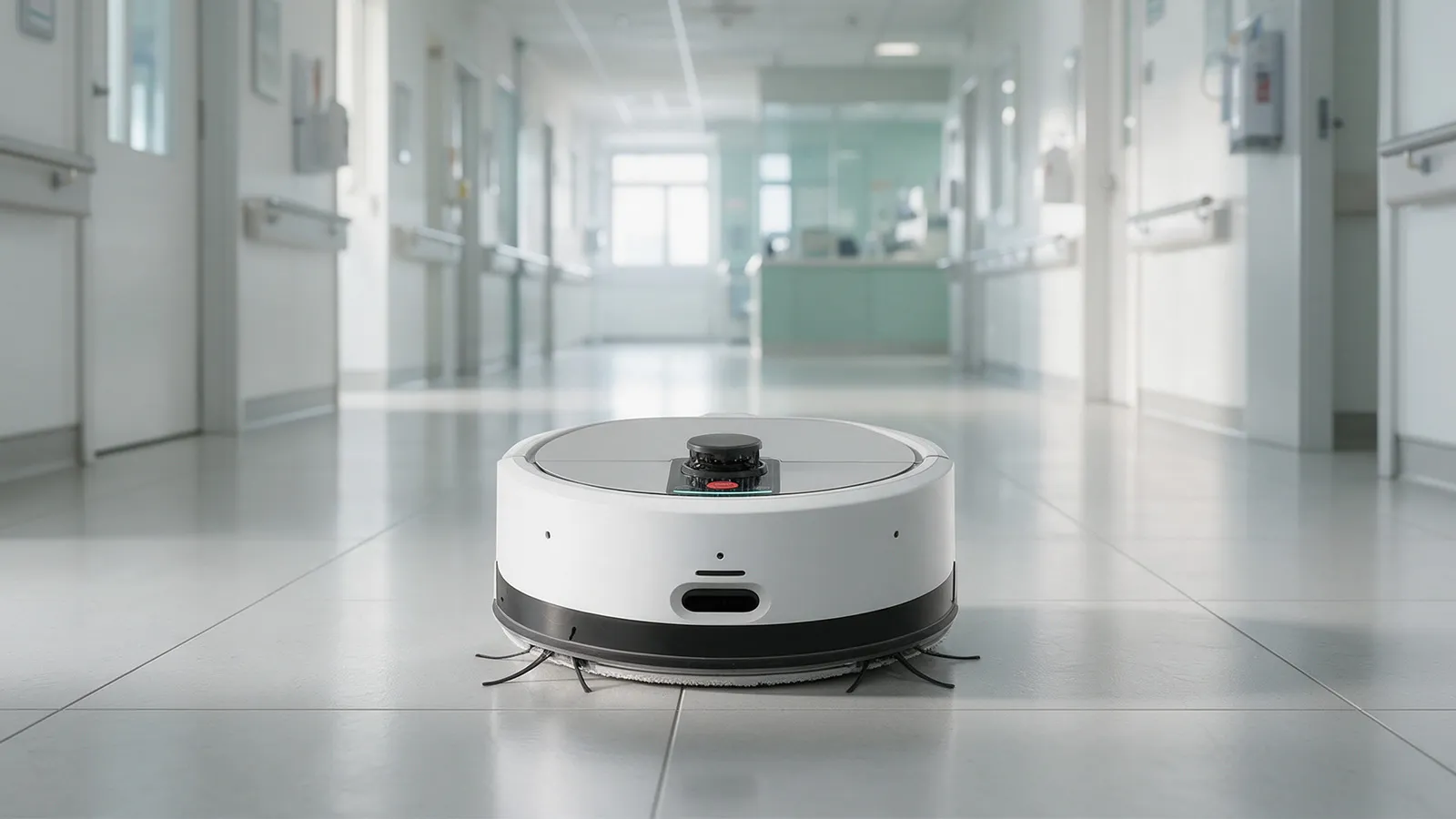
Wards cleaned at night, quietly
2Lobby scrubs per day
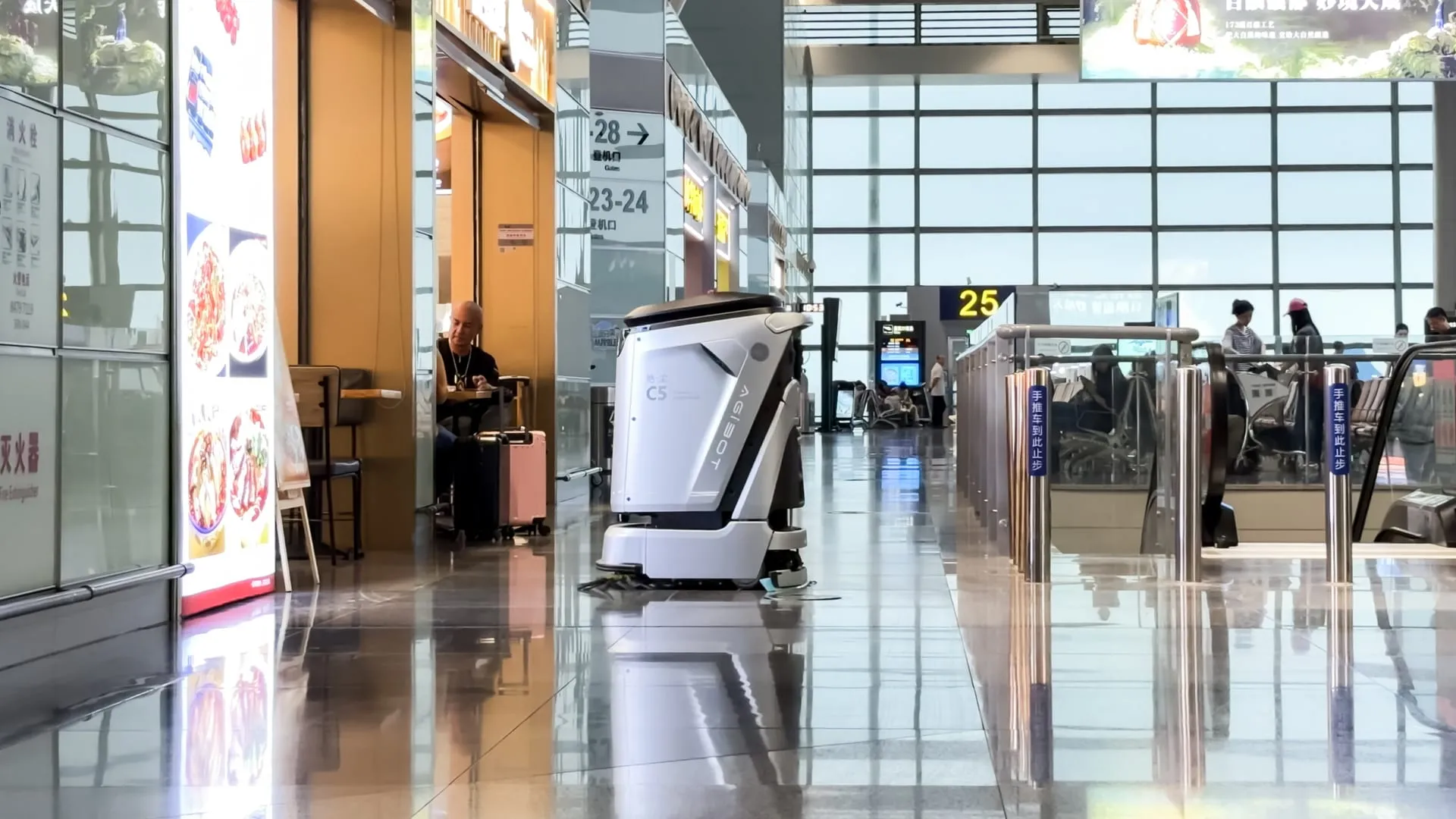
Cleaning without closing the airport
1,980 m²/hRated cleaning rate
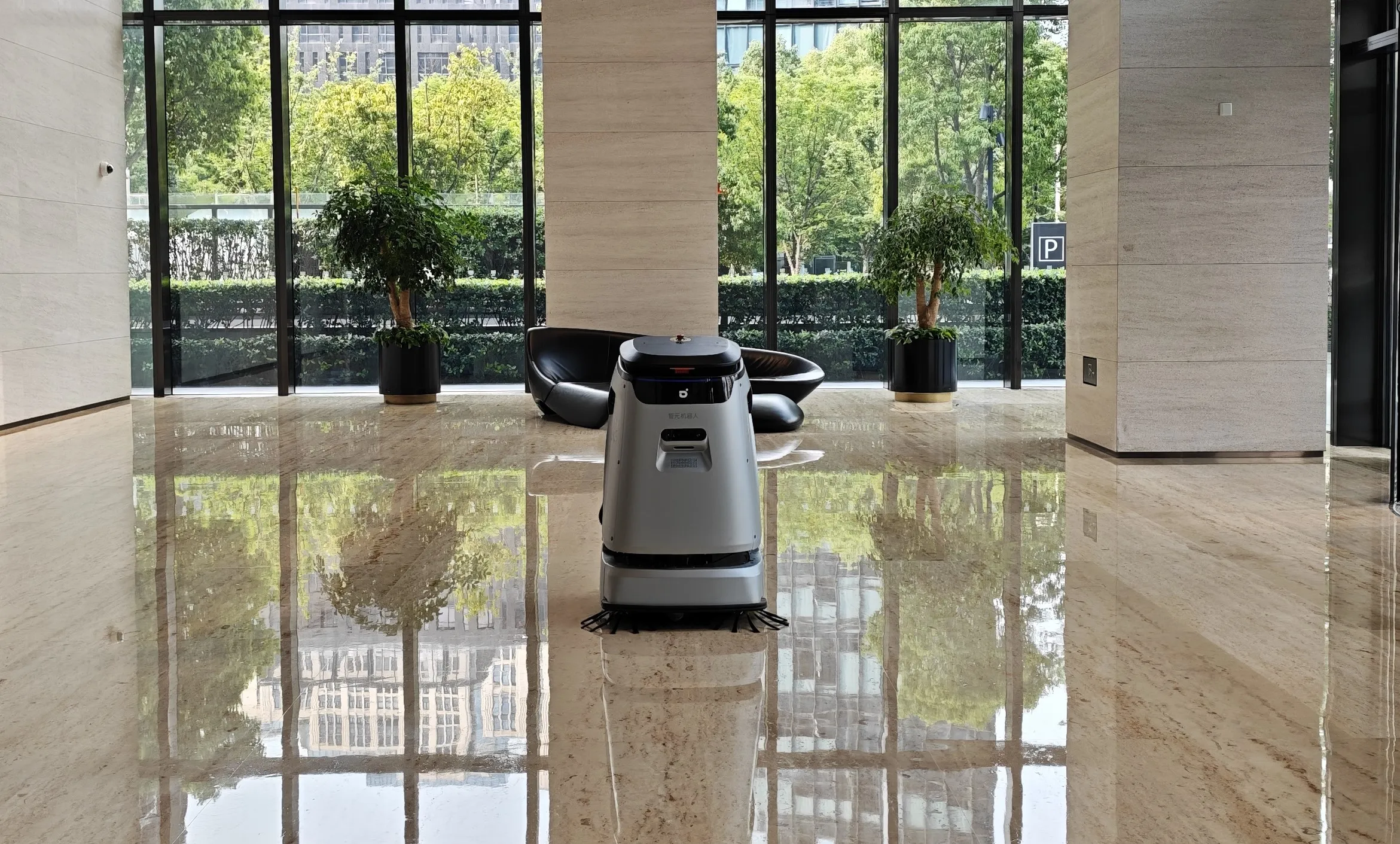
Clean floors, never in the way
NightlyFull-floor scrub
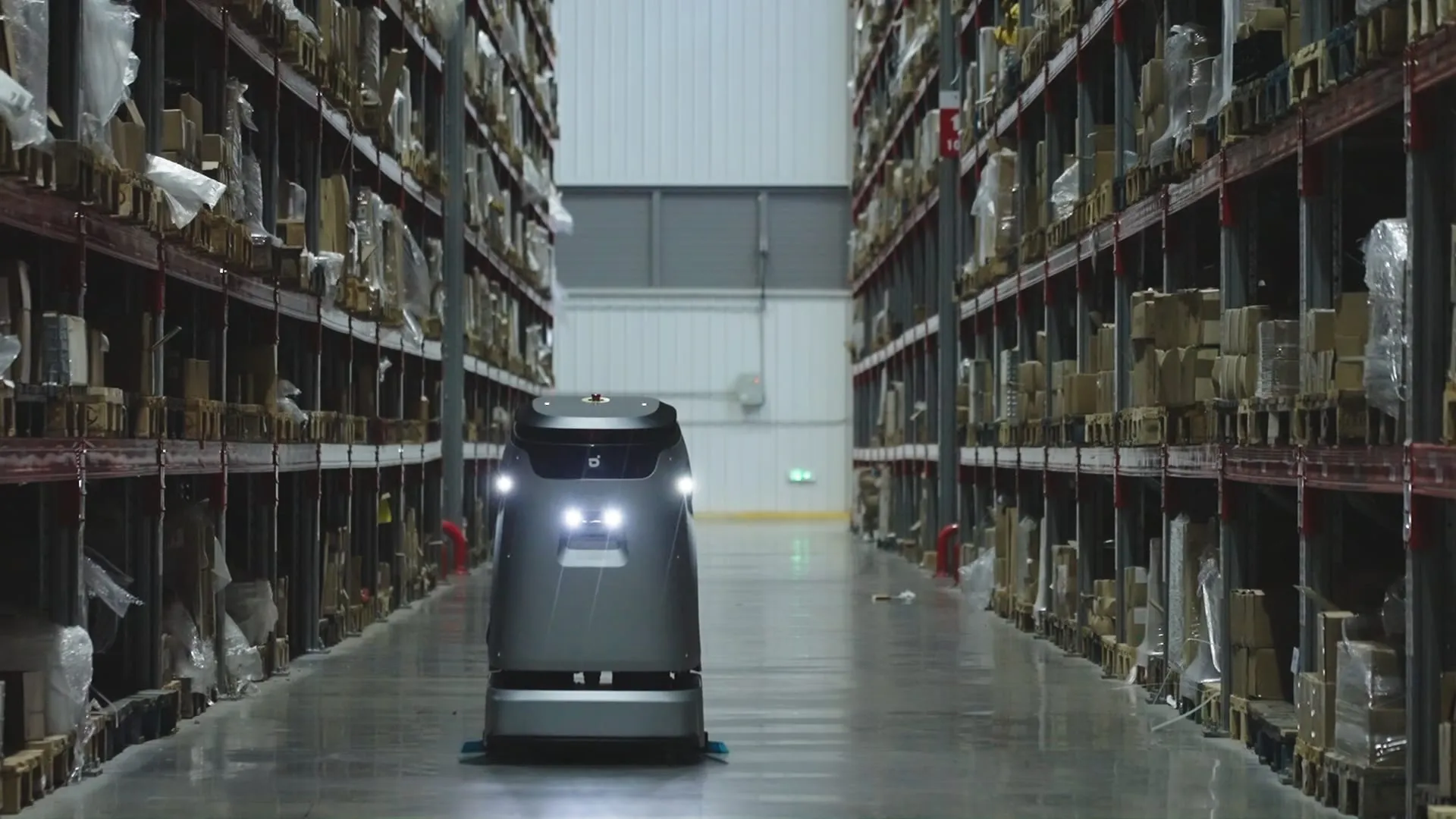
Cleaning on the warehouse clock
Round the clockCleaning window